What Is Trench Shoring and When Is It Required?
Last updated: September 10, 2026
Key Takeaways
- That is why “it is only 4 feet deep” is not a free pass.
- Verify whether the excavation is 5 feet or deeper, because that is a major threshold in OSHA practice.
- A common rule people remember is that trenches 5 feet deep or more generally need a protective system unless the excavation is in stable rock.
- Verify the setback against the site plan or the competent person’s direction; on many jobs, the spoil is kept at least 2 feet from the edge.
Trench shoring is the temporary support system used to keep trench walls from caving in while people work below ground. Dig deep enough for a person to enter, and trench shoring is one way to make the job safer; in many cases, it also keeps the work legally compliant. It matters most on loose soil, deeper cuts, or sites where nearby loads could shove the walls inward. Simple.
Who trench shoring is for — and who should do something else
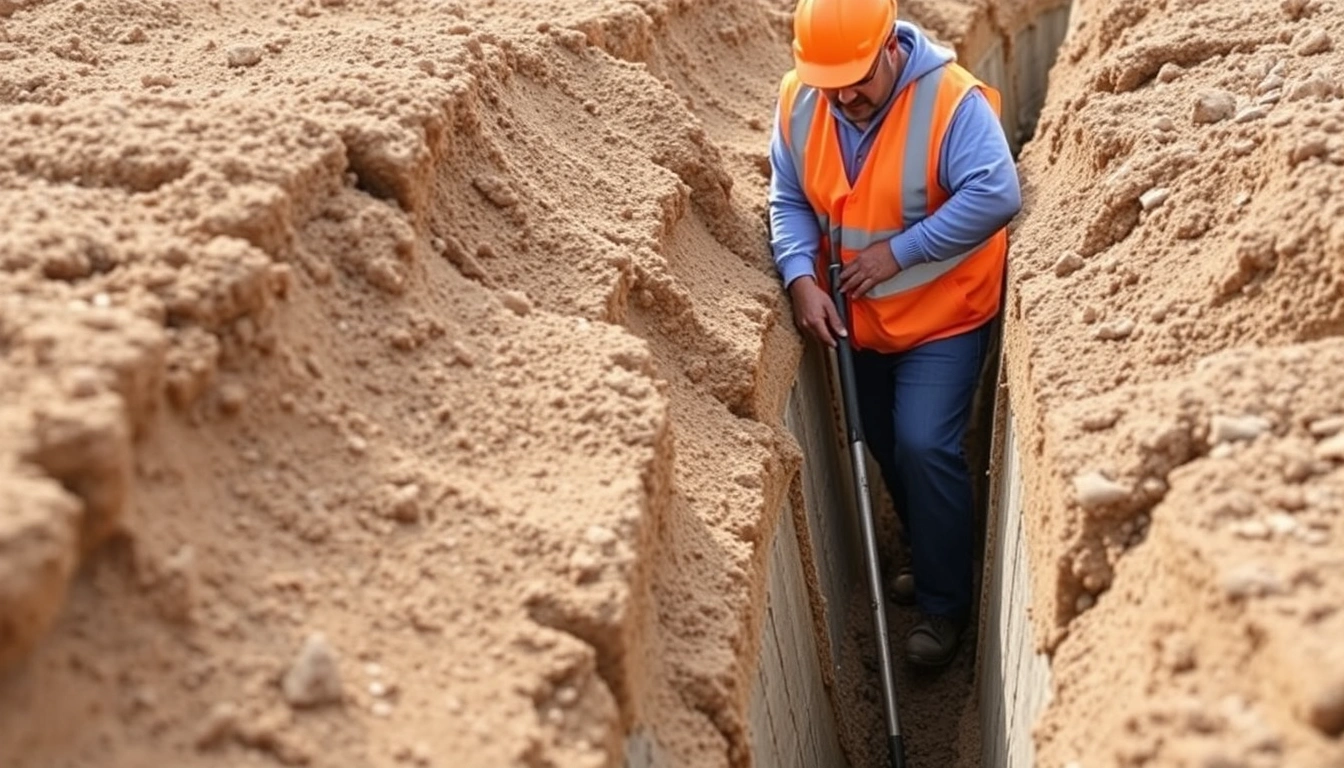
Trench shoring is for anyone opening an excavation where workers, inspectors, or trades have to enter a trench and the sides cannot safely stand on their own. Utility crews, plumbers, foundation contractors, civil contractors, and site supervisors all run into that problem. So do the people deciding whether a trench needs support, a sloped face, or a trench box. It assumes you already know the difference between an excavation and a trench: a trench is a narrow excavation deeper than it is wide, usually with one or both sides exposed.
This is high-stakes work. A collapse can trap a person in seconds. So the real question is not, “Can I get away without support for a little while?” It is, “What keeps the sidewalls stable for the entire time anyone is inside?” In the U.S., OSHA 29 CFR 1926 Subpart P is the main trench safety rule set, and many contractors use it as the baseline even when local rules are stricter.
A generic article often lumps shoring, shielding, and sloping together. They are not the same. Shoring is a support system that resists soil movement. Shielding is a protective structure, such as a trench box, that gives a space of protection if a collapse occurs but does not necessarily hold the soil back. Sloping cuts the trench wall back at an angle. I would not treat them as interchangeable; the right choice depends on depth, soil type, water, nearby vibration, and whether the trench is changing through the day. When conditions are uncertain, consult a competent person or trench safety professional and OSHA 29 CFR 1926 Subpart P. OSHA
If you are an untrained homeowner cutting a short trench for a drain line or cable, the rule is simple: do not enter a trench that needs support unless you understand trench protection, locate utilities first, and can follow the local excavation requirements. If the cut is more than shallow, if the soil is unstable, or if anyone has to climb down inside, this is not the place to improvise. Honestly, that’s where trouble starts.
What trench shoring actually does
Trench shoring keeps the sides of an excavation from moving inward. It does that by applying pressure or restraint to the trench walls so the soil cannot collapse into the opening. The aim is not to “make the trench strong” in some vague sense; the aim is to control lateral earth pressure, which is the sideways force soil places on the cut face.
Common shoring systems include hydraulic shores, timber shores, and pneumatic or mechanical systems. Hydraulic shoring uses cylinders pressed between opposing trench walls. Timber shoring uses vertical and horizontal members and tight wedges to brace the sides. In practice, hydraulic systems are common because they can be installed quickly and adjusted as the trench changes, but they are not magic. Placement still has to be right. Soil still has to be sound.
The broader term here is “protective system.” Shoring, shielding, and sloping all sit inside that category. A trench box, for example, protects workers by creating a safe area inside the box, but the trench walls outside the box can still fail. If the trench is wider than the box or if there is unsupported soil above the box, the danger remains. Like a leaky umbrella, it only helps where it covers.
Shoring also does not solve every problem in a trench. It does not replace safe access and egress, such as a ladder placed so that workers do not have to travel more than 25 feet to get out. It does not fix poor spoil pile placement; OSHA says keep spoil and materials at least 2 feet from the edge unless the competent person directs otherwise. It does not make a trench safe under water seepage, surcharge loads from equipment, or unstable backfill. Those conditions can overwhelm even a well-set support system. OSHA
I would treat shoring as one part of a trench protection plan, not the whole plan; if conditions are uncertain, consult a competent person or trench safety professional and follow OSHA excavation requirements. A trench can be “shored” badly and still be dangerous. The difference between a supported trench and a safe one is often in the details: soil classification, installation sequence, and whether the support remains in place until backfill or the structure is secure, so consult a competent person when the trench changes. CDC/NIOSH
When is trench shoring required?
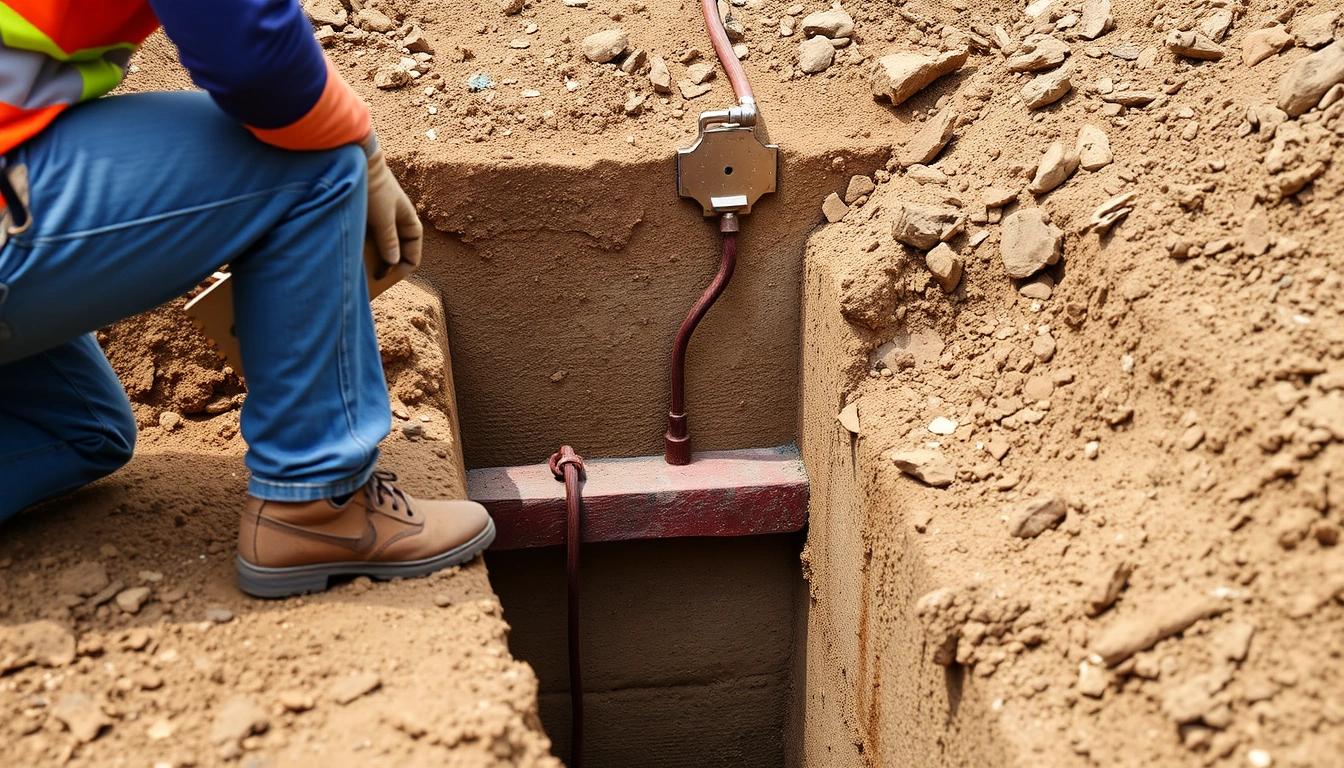
Trench shoring is required when the trench conditions make a cave-in possible and the chosen protective method must be support rather than slope or a box. In plain terms, that means it is required whenever the soil, depth, geometry, or adjacent loads mean the walls cannot safely stand long enough for people to work inside without protection.
A common rule people remember is that trenches 5 feet deep or more generally need a protective system unless the excavation is in stable rock. In U.S. OSHA practice, trenches 5 feet or deeper require a protective system unless the excavation is made entirely in stable rock; and if conditions are especially hazardous, protection may be needed at shallower depths too. So “it is only 4 feet deep” is no free pass. Soil can fail at shallow depth, especially when it is wet, cracked, layered, or disturbed. OSHA
Shoring becomes the preferred answer when sloping is not practical. That happens in tight urban sites, near property lines, beside roads, around existing utilities, or where you cannot widen the cut enough to make stable slopes. A trench box may be enough in some of those cases, but if the trench shape, depth, or work sequence leaves unsupported sections, shoring is the control that keeps the walls from moving.
The real trigger is not depth alone. It is a mix of depth, soil, water, vibration, surcharge loads, and time. “Surcharge” means added load near the trench edge, such as spoil piles, machinery, or traffic. A backhoe parked too close to the lip can turn a marginal trench into an immediate collapse hazard. OSHA’s excavation standard says protective systems are generally required at 5 feet and may be needed below that when the competent person sees hazard signs; the exact choice depends on the site, so consult a competent person before entry. OSHA
I would say shoring is required when the trench is deep enough to endanger a worker and the walls are not guaranteed to stay stable on their own for the full work period; when in doubt, consult a competent person or trench safety professional. If you need to guess, assume you need protection and verify the soil and depth before anyone enters. That math stops working fast.
How do you decide what protection the trench needs?
Check the soil, the depth, the water, the nearby loads, and the work sequence before entry. The order matters because a trench that looks acceptable at the start can turn unsafe after rain, a utility cut, or a truck crossing nearby.
- Measure the trench depth and width at the point of entry. Use a tape or grade rod to confirm the deepest point; don’t eyeball it. Verify whether the excavation is 5 feet or deeper, because that is a major threshold in OSHA practice. Watch for any spot where the trench deepens unexpectedly or the floor is uneven.
- Classify the soil. Check whether it behaves like stable rock, Type A, Type B, or Type C in OSHA terms. Verify the trench wall for cracking, sloughing, granular collapse, or water staining. Soil that looks layered, previously disturbed, or saturated pushes you toward more conservative protection.
- Inspect for water. Look for seepage, standing water, or softening at the base and walls. Verify whether rain, groundwater, or broken utilities are adding water. Any active inflow is a problem, because water weakens the sidewall and can make a support system misbehave.
- Check surcharge loads near the edge. Keep spoil piles, stored pipe, and equipment away from the lip. Verify the setback against the site plan or the competent person’s direction; on many jobs, the spoil is kept at least 2 feet from the edge. Vibration or load directly beside the trench is a problem.
- Choose the protective method. Decide whether to shore, shield, or slope. Verify that the method matches the trench depth and soil, and that the crew understands the installation sequence. A trench box in the wrong shape, or with exposed sections outside the shield, is a bad fit.
- Install access and egress. Place a ladder, ramp, or stair so a worker never has to travel more than 25 feet to exit. Verify the ladder extends above the landing and is stable. Protection without a quick exit route is a half-finished setup.
- Check the support as the trench changes. Re-inspect after rain, after any collapse signs, after striking a utility, and before each shift. Verify that shores are tight, cylinders are seated, and no wall has started to bulge. Yesterday’s setup may not match today’s ground conditions.
That sequence is the part people often skip. They jump from digging to entering. Usually, that’s how trouble walks in.
What are the mistakes people actually make?
The most common mistake is treating shallow depth as safe depth. A 4-foot trench can still fail if the soil is loose or wet. The consequence is a collapse hazard that workers underestimate, and the fix is to use the soil and site conditions, not the tape measure alone, to decide on protection; when the conditions are unclear, consult a competent person and follow OSHA trench rules. OSHA
Another mistake is putting the spoil pile and equipment too close to the edge. The consequence is extra pressure on the wall, which can trigger sloughing or a full collapse. The correct alternative is to keep spoil and heavy equipment back from the lip and route traffic away from the trench.
A third mistake is mixing protection methods without understanding the limits. For example, a crew may place a trench box in the excavation but leave unsupported ends or enter the trench beyond the box. The consequence is a false sense of safety. The correct alternative is to treat the box as a shield with defined limits, or to shore the entire exposed section.
A fourth mistake is ignoring water. The consequence is softening soil, loss of bearing, and sudden wall movement. The correct alternative is to stop, dewater if the plan allows it, and reassess the support system before resuming work.
A fifth mistake is changing the trench after the support is installed. Cutting the bottom wider, undercutting the wall, or removing a shore to make room can defeat the whole system. The consequence is instability that may not be obvious until someone is already inside. The correct alternative is to leave the excavation geometry alone unless the protection plan is revised first.
A sixth mistake is assuming one day’s safe conditions will hold after weather or site changes. The consequence is delayed collapse, which is one of the more deceptive trench hazards. The correct alternative is a fresh inspection before each shift and after any event that could affect the ground.
When should you stop and change the plan?
Stop the job and change the plan when the trench no longer matches the protection system you chose. Here are the clearest stop signs:
Water is entering the trench: Active seepage, pooling, or a broken line means the walls are weakening — stop entry, dewater or isolate the source, and re-evaluate the trench protection.
The soil starts cracking, bulging, or raveling: Those are early collapse signs — get people out and install or upgrade protection before anyone re-enters.
Unsupported sections remain outside a trench box or shore system: The protected area is smaller than the excavation — either extend the system or change the trench shape.
Heavy equipment, spoil, or stockpiles are crowding the edge: The added surcharge can overload the wall — move the load back and reassess the trench edge.
The trench is deeper than expected at any point: One low spot can change the whole hazard picture — stop, remeasure, and apply the more protective standard.
A utility strike, rainstorm, or vibration event has occurred: The trench condition has changed — clear the area and have the competent person re-inspect before anyone goes back in.
On a high-stakes job, “stop and reassess” is not caution theater. It is the right move when the ground changes, because trench collapses leave little margin for error.
What changes in hard ground, wet soil, or tight sites?
Hard ground, wet soil, and tight sites each change the trench decision in a different way, and none of them lets you ignore the basics. Stable rock can reduce the need for shoring, but only if it is actually competent rock and not fractured material that merely looks solid from the surface. Wet soil usually pushes you toward more conservative support because water reduces cohesion and makes wall failure more likely. Tight sites often make sloping impossible, which is where shoring or a trench box becomes the practical option.
The edge case most people miss is layered soil. A trench wall can have a stronger top layer and weaker lower layer, or the reverse. That matters because the wall can fail along the weak layer even if the surface looks fine. Another edge case is adjacent structures or traffic. A trench near a building foundation, road, or parked equipment has surcharge and settlement issues that a simple depth rule does not capture. In those settings, I would not rely on a one-size-fits-all trench box plan.
Cold weather also changes the picture. Frozen crust can hide soft ground beneath it, and thawing can destabilize the cut. Rain after a dry period can do the same. A trench that was acceptable in the morning may need a different protection choice by afternoon.
If the site is too tight to slope and the trench is too long or irregular for a standard box, shoring is often the better fit because it can be installed to suit the excavation. But that flexibility comes with a cost: more setup time, more inspection, and more room for error if the support is installed by guesswork. These jobs belong with a competent trench safety lead, not a crew improvising on the fly.
How do you recognize a properly shored trench?
A properly shored trench has the support in full contact with the soil, no visible wall movement, a clear access route, and