What Affects the Cost of Utility Line Trenching?
Last updated: September 10, 2026
Key Takeaways
- A 30-foot trench at 18 inches deep in soft soil is a simple excavation.
- The same 30 feet at 48 inches deep under a driveway is a different class of job.
- A 100-foot trench can be cheap or expensive depending on depth, access, and restoration.
- In the U.S., call 811 before any digging; that is the standard utility-locate step and it is not optional.
Depth, soil, length, surface type, and the cleanup afterward drive utility line trenching costs. That is the short version. For anyone asking what affects cost utility line trenching, the answer is usually the route conditions, not just the feet of trench. If you are budgeting for electric, water, gas, sewer, or data conduit, remember that the hole itself is only part of the bill; utility locating, permits, rock, dewatering, paving, and cleanup can swing the price more than the digging does.
Who this applies to — and what I’m assuming
This applies to anyone planning a new buried utility run on private property or a job that starts at a structure and ends at a connection point, usually over a 20-foot to 200-foot span. I’m assuming you already know the utility type you want underground and have a rough route in mind. I’m also assuming you’re trying to understand the cost drivers well enough to compare bids, not to price out a fantasy trench with no site details.
Because this is a safety-sensitive job, I would not treat it like ordinary landscaping; if the line crosses a public right-of-way, runs near gas, sewer, or electric service, or needs a utility company tie-in, consult a qualified professional. In the U.S., call 811 before any digging; that is the standard utility-locate step and it is not optional. If the work involves pressurized gas, energized electrical service, a sewer tap, or road cutting, I would stop at planning and bring in the right contractor and, where required, the utility owner. For a simple shallow trench on private ground for low-voltage conduit, an informed homeowner may still handle some prep, but the digging depth, code requirements, and inspection rules still matter. OSHA’s excavation rules also make clear that trench safety is a serious jobsite issue, not a casual one. OSHA excavation and trenching
What actually drives the price?
The price comes down to how hard the trench is to make and finish, not just how many feet you want opened. A straight 50-foot trench in soft topsoil is a different job from a 50-foot run through clay, tree roots, and asphalt. Contractors usually price by a mix of linear footage, depth, machine access, and restoration, and the spread can be wide enough that two jobs of the same length are not comparable.
The biggest variables are:
- Length and depth. A shallow 18-inch conduit trench is faster than a 48-inch water or sewer run. Deeper trenches need more spoil handling, more shoring awareness, and more backfill.
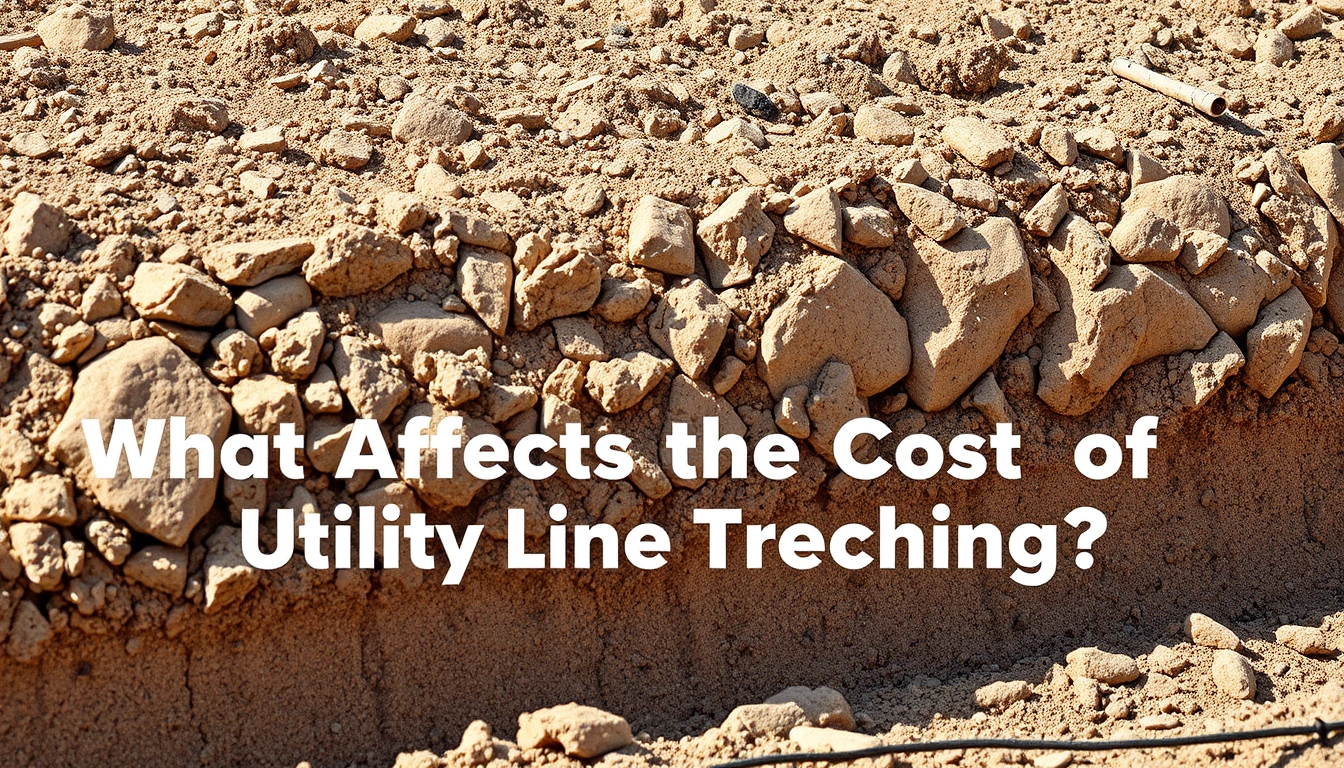
- Soil type. Loose topsoil cuts quickly. Dense clay slows production. Rock, cobbles, or buried construction debris can turn a normal trench into a problem trench.
- Access. If a compact excavator can reach the line directly, cost stays lower. If the crew has to hand-dig around fences, decks, trees, or narrow side yards, labor rises fast.
- Surface to cross. Turf is easier to restore than concrete, brick pavers, stamped concrete, or asphalt. Sawcutting and patching are separate cost items.
- Utility type and depth requirement. A communications conduit at 12 to 18 inches is not the same as a sewer line at a much deeper grade. The required slope for gravity sewer also affects how the trench is laid out.
- Locates and hazards. If there are marked utilities, the crew may have to vacuum expose or hand-dig around them.
- Spoil disposal and backfill. If the excavated soil cannot be reused, hauling and imported fill add cost.
- Permit and inspection requirements. Some municipalities require trench permits, street-opening permits, or utility inspections before backfill.
A generic article often pretends the trench is the whole story. It is not. The final bill often reflects what had to be avoided, protected, repaired, or inspected — that’s where the money goes. National guidance on underground work emphasizes planning before digging. 811 Before You Dig
How do contractors price a utility trench?
They usually price by linear foot, but the final number is built from a site visit, not a ruler. The estimator looks at route length, depth, ground conditions, equipment access, and restoration, then decides whether the work is a simple open-cut trench or a slower, more controlled excavation. On small jobs, there is often a minimum mobilization charge because a crew, machine, fuel, and transport can cost the same whether the trench is 15 feet or 60 feet.
Here is the order I would expect on a normal utility trench job:
- Mark the route and call for locates. Mark the proposed line with paint or flags and request utility locates before any digging. Verify that the locate tickets are current, because many expire in roughly 10 working days depending on the area. A problem shows up when the route crosses unmarked service lines or the marks do not match the planned path.
- Confirm the utility type, depth, and code requirement. Measure the target run and the needed depth in inches, not guesses. A low-voltage conduit may only need shallow burial, while sewer and water lines often need much deeper installation. Verify the required cover and slope before pricing. A problem shows up if the route cannot maintain slope or cover without changing grade.
- Inspect access and clearance. Check whether a machine can get within 3 to 5 feet of the line and whether gates, fences, AC units, retaining walls, or trees block the path. Verify turning radius and staging space. A problem shows up if the excavator must be swapped for hand labor or a smaller machine.
- Probe for hard material. Identify asphalt, concrete, bedrock, root masses, and buried debris. Verify where sawcutting or trenching through slab is needed. A problem shows up when the route crosses an existing driveway or foundation edge, because restoration costs jump.
- Estimate soil handling. Note whether spoil can be stockpiled on site or must be hauled off. Verify whether the excavated soil is clean enough for reuse or whether imported fill is needed. A problem shows up if contaminated or saturated soil cannot be reused.
- Plan dewatering if the trench will collect water. In wet ground or high water table areas, check whether groundwater will enter the trench. Verify if pumps, sump pits, or trench boxes are needed. A problem shows up when the trench sloughs in or turns to mud before pipe placement.
- Include backfill and restoration. Measure the surface area to restore: sod, topsoil, gravel, pavers, asphalt, or concrete. Verify whether compaction is needed in lifts, often 6 to 12 inches depending on the fill and local practice. A problem shows up if the trench settles after the crew leaves.
- Review permit and inspection points. Confirm whether the work needs a building permit, plumbing permit, electrical permit, or road opening permit. Verify who schedules inspections and what has to be open for them. A problem shows up if backfill happens before inspection and the job has to be reopened.
The practical result is this: a bidder who quotes only “per foot” without asking about depth, surface, and restoration is usually leaving out the expensive part, and a Federal Highway Administration guide on utility work notes that excavation details and restoration affect both cost and project control. FHWA utility construction guidance
What changes the price the most on a real job?
Depth and restoration usually change the price more than the digging speed itself. A 30-foot trench at 18 inches deep in soft soil is a simple excavation. The same 30 feet at 48 inches deep under a driveway is a different class of job. Deep trenching may require more careful sidewall control, more spoil management, and more time to place the utility at the correct grade.
Surface restoration is often the surprise line item. If the trench crosses turf, the fix might be topsoil and seed. If it crosses pavers, asphalt, or concrete, the repair cost can exceed the excavation cost. I’d be especially cautious around decorative hardscape, because many bids only cover sawcutting and backfill, not a quality patch that blends with the existing surface.
Rock is another major cost driver. Once a crew hits ledge, large rock, or a thick layer of rubble, the project may require a breaker, tooth bucket, or rock hammer. That can turn a one-day trench into a multi-day excavation. Tree roots also slow the work, especially near mature trees where hand digging or vacuum excavation may be the safer choice.
Water is the hidden variable most people miss. A trench that keeps filling with groundwater needs pumping and more cautious installation. Saturated soil also complicates compaction, which matters because poor compaction leads to settlement. A trench that looks finished on day one can sink weeks later if the backfill was placed wet and loose.
The utility itself matters too. Water lines and sewer lines often demand different bedding and slope control than a simple conduit run. Gas and electric service work bring stricter safety and code requirements. That changes labor time and the level of qualification needed on site.
When should I stop and hire qualified help?
You should stop and bring in qualified help when the trench stops being a straightforward, shallow, private-property excavation. That is the right move in several specific cases:
The route crosses a street, sidewalk, or public easement: this usually triggers permits, traffic control, and restoration standards — use a contractor that handles public-right-of-way work.
The trench is near marked gas, electric, or fiber lines: the margin for error is small, and a strike can shut down service or create a hazard — use hand digging or vacuum excavation where required and let qualified crews handle the tie-in.
The soil is saturated, collapsing, or full of groundwater: sidewalls can slough in and bury tools or workers — pause the job and use trench-safe methods, shoring, or dewatering.
The trench needs to be deeper than a typical shallow conduit run: once depth increases, the chance of unstable sidewalls and incorrect grade rises — have a qualified excavator set the line and depth.
The project involves gas, sewer, or energized electrical service: those are not casual DIY utilities — use licensed trades and follow the local code and inspection process.
The trench must pass under a driveway, slab, or retaining wall: the excavation and restoration are more expensive and easier to damage than people expect — get a bid that includes cutting, support, and patching.
There is rock, old foundation debris, or buried construction waste: ordinary trenching estimates usually fail here — expect slower production and specialized equipment.
My rule is simple: if the work could fail in a way that affects public utilities, structure safety, or inspection sign-off, it is no longer a casual trenching job, and OSHA’s trenching materials are a useful benchmark for when to bring in experienced help. OSHA trenching and excavation
The mistakes that make trenching quotes blow up
The biggest budgeting mistake is assuming linear footage tells the whole story. A 100-foot trench can be cheap or expensive depending on depth, access, and restoration. The better way is to price the route by sections: open yard, obstacle zone, hard surface, and tie-in point.
Another common mistake is ignoring locate marks. If the route is not cleared through 811 or the local locate process, the crew may have to stop and wait, or hand-dig around unknown services. The consequence is delay, change orders, and extra labor. The correct alternative is to get locates before finalizing the schedule.
People also underestimate restoration. Cutting and patching asphalt, concrete, or pavers can cost as much as the trenching itself, sometimes more. The consequence is a bid that looks low and then grows when the surface has to be put back. The correct alternative is to ask for excavation, backfill, and surface repair as separate line items.
A fourth mistake is asking for “just trench it” without specifying depth. Depth affects everything: machine choice, spoil volume, compaction, and safety. The consequence is a bid that is not comparable and may not meet code. The correct alternative is to give the contractor the required cover in inches and the utility type.
A fifth mistake is failing to account for weather and soil moisture. A wet trench can be slower, messier, and harder to compact. The consequence is settlement and rework. The correct alternative is to schedule excavation when the soil is workable and to allow time for proper backfill.
A final mistake is trying to save money by skipping inspection steps. The consequence can be reopening a filled trench, which is one of the least efficient ways to spend labor dollars. The correct alternative is to keep the trench open until required inspections are complete.
What about hard soil, rock, or a tight yard?
Those conditions change the method, not just the price. In a tight yard, a smaller excavator or hand digging may be the practical choice when the crew has to protect fences, tree roots, and adjacent structures, and the safest method depends on the site. That usually lowers machine risk and raises labor time. In rock, the crew may switch from standard trenching to a rock bucket, breaker, or hammer attachment. That changes production rates dramatically. In dense clay, the issue is often not breakage but sticking and cleanup; the trench walls can smear, spoil can cling to the bucket, and backfill may be difficult to compact cleanly if it comes out wet.
There is also a big difference between an open yard trench and a trench under established landscaping. If the finish grade matters, the contractor has to preserve topsoil, separate spoil from clean fill, and restore irrigation lines or edging. A generic estimate often misses those details.
For sewer lines, slope is an edge case that deserves special attention. Gravity sewer needs continuous fall, so the trench may have to start deeper than a water or conduit run. That one requirement can increase excavation volume across the entire route. A short run can still be expensive if the exit point or connection point forces the trench deeper than expected.
What should a good trenching quote include?
A good quote should spell out the trench length, approximate depth, equipment assumptions, locate responsibility, soil or rock allowances, and restoration scope. If the quote says “trench and backfill” but does not say whether the surface is turf, gravel, asphalt, or concrete, I would treat it as incomplete and ask a qualified contractor to clarify it before work starts. If it does not name permit handling or inspection support, I would ask before accepting it.
I would also want to see whether the price includes hauling spoil off site, importing fill, compacting in lifts, and restoring grades. For longer runs, a quote should separate the main trench from the tie-in area, because the tie-in often takes disproportionately more time.
A clean bid is not always the best bid if it leaves out the hard parts, and the reverse is also true: a high bid is not automatically overpriced if it includes rock, dewatering, restoration, and inspection time. The safest way to compare offers is to line them up against the route conditions, the required depth, and the exact scope.