Hiring a Trenching Contractor and Service Trust: The Complete Guide
Last updated: September 10, 2026
Key Takeaways
- Is there room to pile spoil at least 2 feet back from the edge?
- In the U.S., call 811 before excavation and wait for the marks and ticket process to be completed.
- Others take 1 to 3 days once locates, permits, or weather are factored in.
- The same is true if the trench is deeper than about 4 feet, because trench safety changes fast as depth increases and cave-in risk becomes serious.
A trench for water, sewer, electrical conduit, drainage, irrigation, or fiber is not just a matter of “who can dig a straight line?” It is about who will hit the right depth, keep the site safe, protect the utilities, and avoid nasty surprises later. That is what I mean by hiring trenching contractor service trust: choosing someone you can trust to do the excavation correctly, communicate clearly, and stand behind the work. Simple on paper. Not so simple in a muddy yard.
Who this applies to, and what you should already know

Homeowners, property managers, builders, and small business owners are the people I have in mind here — anyone with a defined trenching job, not someone casually window-shopping excavation companies. Hiring trenching contractor service trust matters most when the purpose is already known in rough form: a new utility line, a drain, a footing drain, electrical conduit, a gas line trench, a septic connection, or landscape drainage. Maybe you already have a sketch. Maybe just a route. Either way, that is enough to start.
What you need from this article is a way to judge competence before you sign anything in a hiring trenching contractor service trust decision. So you need to know how deep the trench should be, what drives price, how long the work usually takes, which questions expose weak bidders, and what bad work looks like before it turns into a repair bill. You also need to know when trenching is the wrong task to hire casually. A contractor can dig, sure. But trenching around live utilities, unstable soil, steep slopes, contaminated ground, or public rights-of-way is a different beast.
I would treat this as a qualified contractor job any time the trench is near gas, electric service, fiber, sewer laterals, pressurized water, retaining walls, or a road cut, and I would consult a professional if any of those conditions are present. Same answer if the trench runs deeper than about 4 feet; trench safety shifts quickly with depth, and cave-in risk becomes serious. OSHA’s excavation and trenching page is a good baseline: https://www.osha.gov/excavation-trenching
Permits are not the place to wing it. Many towns require an excavation permit, right-of-way permit, or utility locate before work starts. If your project touches a public sidewalk, street, alley, or easement, the contractor should know the local process, not tell you to “sort it out later.” For permit basics and utility coordination, a local public-works office or utility locator service should be part of the conversation.
What a trenching contractor actually does
A trenching contractor does more than cut a slot in the ground. Route layout, utility locating, machine excavation or hand digging near conflicts, spoil management, slope or shoring, protection of adjacent surfaces, and backfilling plus compaction all belong in the job. Done properly, the trench follows the right line, width, depth, and grade for the intended line; the soil around it settles the way it should.
“Grade” means slope or elevation. For drainage work, the contractor may need to maintain a specific fall, often measured in inches per foot. Water, sewer, and conduit lines may be governed by frost depth, code, or utility clearances. In some places, an irrigation trench might be only 8 to 12 inches deep, while a sewer or service line trench can run several feet deep. The number itself is not the point. Fit the trench to the system, or it fails the job.
Before equipment gets discussed, I would expect the contractor to talk about the line type. A mini excavator, trencher attachment, vacuum excavation, or hand tools may all make sense depending on access and the risk around existing lines. A contractor who wants to bring in a machine without asking about buried utilities is skipping the part that protects your property. For utility locating and damage prevention, the Common Ground Alliance’s safe-digging guidance is a useful reference: https://commongroundalliance.com/ and 811’s national locator information is here: https://call811.com/
There is also a service-trust piece that generic articles often miss. You are not only buying labor; you are buying judgment. Trust shows up in the questions a contractor asks before the first bucket is moved: What is the depth? Where are the marks? Is there a utility locate ticket? Will the trench cross pavement? Does the soil stay wet? Is there room to pile spoil at least 2 feet back from the edge? Those questions tell you whether the person understands excavation as a controlled process or just as machine work.
How I would choose a trenching contractor
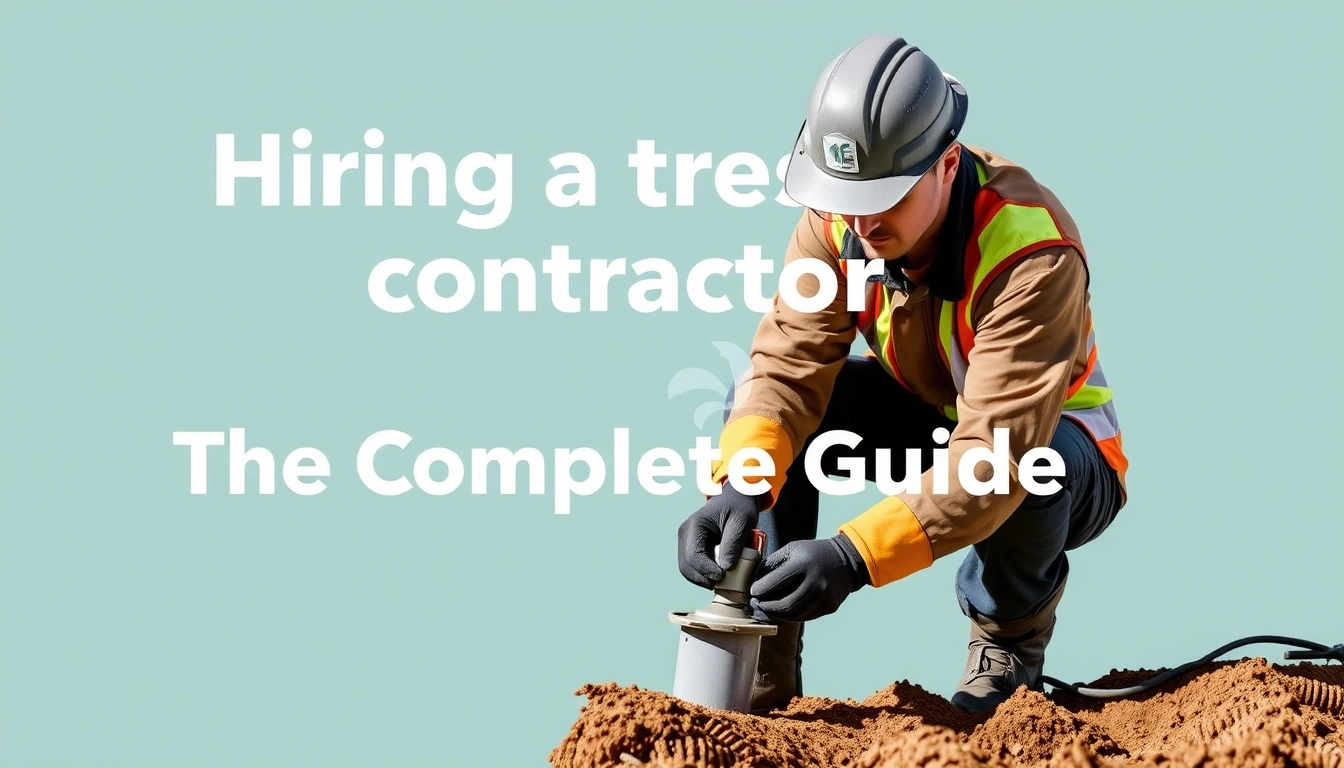
My pick would be the contractor who puts the scope in writing, explains the excavation method, and names the assumptions behind the price. A vague “we do trenching” answer is not enough in a hiring trenching contractor service trust decision. The bid should say what is being dug, roughly how deep and wide, where the spoil goes, whether backfill and compaction are included, and what happens if the crew hits rock, groundwater, or unmarked utility conflicts.
Here is the process I would use.
- Define the trench in plain terms. Write down the line type, approximate length, target depth, and route. For example: “60 feet for 1-inch water service, about 30 inches deep, from meter to detached garage.” Make sure the contractor repeats the same scope back to you. If they cannot restate the job clearly, the bid will probably drift later.
- Get utility locates before scheduling digging. In the U.S., call 811 before excavation and wait for the marks and ticket process to be completed. Check that the marks are visible where the trench will run. Any contractor who says locates are optional or that they can “work around it” without a ticket is waving a red flag.
- Ask how the trench will be opened near known utilities. Near marked gas, electric, or telecom lines, the contractor may need to hand dig, use vacuum excavation, or pothole first. Potholing means exposing a utility in a small test hole to confirm depth and position. Make sure they name the method before starting. If they only say “we’ll see,” that is thin gruel.
- Confirm the trench dimensions and tolerances. Ask for expected width, depth, and grade tolerance. For drainage, you want to hear about fall in inches per foot. For a conduit run, you want enough depth for code or local requirement. Make sure they are not guessing; a bad sign is a contractor who shrugs off slope and says “close enough.”
- Ask about soil conditions and spoil placement. Wet clay, loose sand, fill dirt, shale, and rock all change the job. Spoil should usually be placed back from the trench edge, often at least 2 feet away, to reduce cave-in risk. Check that the contractor has a plan for where the soil will go and whether any haul-off is included. If they plan to dump spoil at the lip of the trench, that is a safety issue.
- Clarify safety measures for depth and exposure time. If the trench may be deeper than 4 feet, ask whether the contractor will use sloping, benching, or a trench box. Sloping means cutting back the sides; a trench box is a protective structure. Make sure they understand that soil type and water change the safe approach. If they treat depth as a mere inconvenience, you should stop and consult a professional or a more qualified excavation contractor.
- Define backfill and compaction. Backfill is the material returned to the trench after the utility is installed. Compaction is the process of tightening it in layers, often in 6- to 12-inch lifts depending on the site. Check that the bid says whether compaction is included and to what standard. If backfill is just “thrown in,” expect settling later.
- Ask what happens if conditions change. Rock, groundwater, buried concrete, root masses, or an unmarked line can turn a simple trench into extra labor. Make sure the contractor explains the change-order trigger before work starts. A problem sign is a bid that looks cheap because it excludes hard-to-predict conditions.
I would also compare at least three bids, but not just on price. A good bid tells you where uncertainty lives. The lowest number often comes from the contractor who assumes the most favorable conditions. Once the ground turns out to be wet, rocky, or cluttered with utilities, that low number can balloon. Fast.
For service trust, I care more about the way a contractor handles uncertainty than the sales pitch. A trustworthy contractor says, “This part is included; this part is a risk; here is how I bill it if it happens.” That is not padding. It is how a trenching job stays honest.
How much does trenching usually cost?
Trenching cost depends on length, depth, soil, access, utility density, and whether the job includes backfill, compaction, or restoration. There is no honest one-price answer. A short, open backyard trench is a different task from a trench across a driveway, through root-heavy soil, or beside existing services.
The main cost drivers are easy to name. Depth matters because deeper trenches take more time and may require protection systems. Soil matters because clay, rock, and saturated ground slow excavation. Access matters because a mini excavator may fit through a gate while a larger machine cannot. Restoration matters because a crew that only digs is cheaper than one that removes pavement, replaces sod, or repaves a cut. Utility conflicts matter because hand digging and potholing take time.
When a contractor prices by linear foot, I want to know what the unit rate includes. A price per foot for a shallow irrigation trench is not the same as a price per foot for a sewer or gas line trench. Some jobs are priced by the hour, especially when the route is uncertain, the site is tight, or the ground is unpredictable. Hourly pricing is not automatically bad; it can be more honest when the contractor cannot see what is underground. What matters is whether the rate, minimum charge, and machine time are disclosed.
Suspiciously low bids need a hard look, especially when exclusion items are missing. Typical missing items include permits, utility locate delays, hand digging near marks, rock removal, dewatering, haul-off, imported fill, and compaction testing. A contractor can give a low first number by assuming none of those happen. That is not savings; it is a future argument.
If you want a cleaner comparison, ask each bidder the same questions: How deep is your price based on? What soil assumptions are you making? Does it include spoil removal? Does it include backfill and final grading? What counts as a change order? The answers matter more than the headline total.
A good price is the one that fits the scope you actually have. A bad price is the one that only fits the scope you hoped you had.
What should I ask before I hire one?
You should ask questions that reveal whether the contractor understands risk, local rules, and the details of your job. The goal is not to “interview” for politeness. The goal is to hear whether the person thinks like an excavator or like a salesperson in a hiring trenching contractor service trust conversation.
Start with these:
- What depth are you pricing, and how will you confirm it?
- How do you handle utility locates and exposed marks?
- What happens if you hit rock, groundwater, or buried concrete?
- Will you hand dig near marked lines?
- Is spoil removal included, and where will the soil be placed during work?
- Will backfill and compaction be part of the job?
- Do you handle permits or right-of-way coordination, or do I?
- What is your plan if the trench needs to cross pavement or landscaping?
- What equipment will you use, and why that machine?
- How do you protect adjacent structures, fences, driveways, and roots?
I would pay attention to the specifics in the answers. A contractor who says “depends on the site” is not automatically evasive; that is often true. But they should still name the variables. For example, on a narrow side yard, a compact mini excavator may be the right tool. In a tight utility corridor, the safer choice may be hand digging plus vacuum excavation. A trench under a driveway can demand saw cutting and restoration. These are normal distinctions.
You should also ask for the practical timeline. Some jobs can be done in a few hours. Others take 1 to 3 days once locates, permits, or weather are factored in. If the contractor promises a same-day start on a job that needs utility marks or municipal approval, that is either optimism or pressure sales.
One blunt question helps too: What do you think could go wrong here? A trustworthy contractor usually has an answer. They may mention wet soil, shallow utilities, old fill, access limits, or settling. If they cannot name a single risk, they are either inexperienced or not paying attention.
For trust, a qualified answer is better than a perfect answer.
What a bad trenching job looks like
A bad trenching job usually shows up in the first hour, not months later. The signs are visible if you know where to look: uneven depth, sloppy line, spoil piled against the edge, unprotected open cuts, torn utility marks ignored, and backfill left loose or lumpy. If the trench is for drainage, bad work may also show up as reversed slope or a flat section that traps water.
One of the worst signs is a trench cut too close to an existing utility without careful exposure, because that can mean the contractor skipped the locate review or decided speed mattered more than confirmation. Another bad sign is overdigging, where the trench is deeper or wider than needed because the operator rushed the bucket or used the wrong attachment. Overdigging means more backfill, more settlement, and sometimes a structural problem if the line loses the designed support.
A bad job also looks careless around the spoils. The excavated soil should not be stacked at the lip of the trench, especially in deeper cuts. That extra weight can contribute to collapse. If the crew leaves a trench open without barriers in a place where people, pets, or vehicles can fall in, that is a safety failure, not just a housekeeping problem.
After backfill, I look for settlement, sink lines, soft spots, and water pooling. A trench that was not compacted in lifts often settles along the route. That can mean a sunken lawn strip, a hollow walkway edge, or a driveway patch that drops. If the trench supports pavement, compaction and restoration matter even more. A patched surface that looks smooth on day one but sinks after the first rain is not finished work.
This is where service trust turns practical. A contractor who stands by the job will explain why the trench is shaped the way it is, what was compacted, and what they are willing to return for if settlement occurs within the agreed scope. Someone who disappears after digging is likely treating the job as a hole, not a service, and you should consult the contract or a professional before assuming the work is complete.
When should I stop and call someone else?
You should stop the job and bring in a better-qualified contractor, utility specialist, or permit-handling crew when the trench stops being routine excavation and starts becoming controlled risk. The wrong move here is to “just get it done” because the machine is already on site.
The trench is deeper than 4 feet: that is the point where cave-in risk becomes much more serious and protective systems matter — stop casual digging and use a contractor who can explain sloping, benching, or a trench box in line with OSHA excavation practice.
There are marked gas, electric, fiber, or sewer lines within the route: the trench now depends on accurate exposure and clearance — stop and require hand digging or potholing near the marks until the exact depth and position are confirmed.
The trench crosses a driveway, sidewalk, curb, or street edge: restoration, traffic control, and permit issues may apply — stop and get a contractor who handles pavement cutting, right-of-way rules, and proper backfill.
The soil is saturated, collapsing, or pumping water: the trench wall may not stand long enough for safe work — stop and switch to a contractor who understands dewatering, shoring, or a different installation method.
Rock, old concrete, buried rubble, or large roots are showing up: the original scope no longer matches the site — stop and expect a change in method, cost, and time rather than forcing the original plan.
The line must hit a precise slope or elevation, especially for drainage or sewer: a small error can cause standing water or poor flow — stop and use someone who can set grade carefully, not just dig by eye.
You do not have a utility locate ticket or the marks are unclear: the route is not confirmed — stop until the locate process is complete or the marks are refreshed.
The contractor cannot explain backfill, compaction, or restoration: the job may look finished but fail later — stop and choose someone who treats the trench as installed infrastructure, not a temporary hole.
I would also stop if the contractor pressures you to skip permits or says the underground utilities are “probably shallow.” “Probably” is not a safe excavation plan. A trench is not the place for estimates disguised as certainty, and OSHA’s excavation guidance is clear that protective decisions must match the actual conditions on site.
How long does trenching take, and what does a good result look like?
A small trench can take a few hours; a complicated one can take a day or more, plus return time for backfill, compaction, and restoration. The real schedule depends on utility marks, permit timing, weather, access, and what is found in the ground. A contractor who promises an exact same-day finish before seeing the site is overcommitting.
For a straightforward backyard run, I would expect the work to move in stages: layout, locate review, excavation, utility placement, backfill, compaction, and cleanup. If the job includes concrete cutting, paving, or sod replacement, that adds time. If the job needs inspection before backfill, the trench may sit open until approval is given. That is normal and should be planned for.
A good result has a few visible traits. The trench follows the intended route without wandering. The bottom