Trench Excavation Methods and Equipment
Last updated: October 24, 2026
Quick Answer: 5 feet. For most projects, trench protection becomes a formal requirement at 5 feet deep unless the excavation is entirely in stable rock, so the safest trench excavation method is the one that fits the soil, depth, utility congestion, and protection plan. Trench excavation methods and equipment — The Complete Guide answers that question by matching the method to the job rather than forcing one tool onto every cut.
Trench excavation comes down to one question: how do I remove soil fast enough to stay on schedule without creating a collapse hazard, an over-wide cut, or a utility strike? The answer is not “use a bigger machine.” It is choosing the excavation method, shoring system, and digging equipment that match soil type, depth, space, and utility congestion. For a full trench excavation methods and equipment plan, the first step is to match the method to the site conditions.
I write on excavation and site safety topics because the details are where jobs go wrong: the difference between a stable 4-foot cut in cohesive soil and a dangerous 8-foot trench in saturated sand is not subtle. OSHA’s trenching rules in 29 CFR 1926 Subpart P and the practical guidance from the Trench Safety Stand-Down materials exist for a reason. OSHA’s excavation and trenching page and the Trench Safety Stand-Down resources are the baseline references.
Key takeaways
- The right trench method depends on soil, depth, width, groundwater, and nearby utilities, not just production speed.
- Backhoes and excavators handle most trench work; trenchers win where the line is long, straight, and relatively uniform.
- Shoring, shielding, or sloping is not optional once the trench conditions call for it; pick the protection system before digging starts.
- Vacuum excavation is often the safer choice for daylighting utilities and working in tight utility corridors, but it is slower and not ideal for long runs.
- The biggest mistake is treating every trench like a simple open cut. A trench that looks “easy” can collapse in seconds, so consult a competent person and follow OSHA guidance before work starts.
- Check current guidance from OSHA and the American Society of Safety Professionals (ASSP) before work starts: OSHA’s trenching page and ASSP’s excavation resources are the baseline references.
What counts as trench excavation, and why the method matters
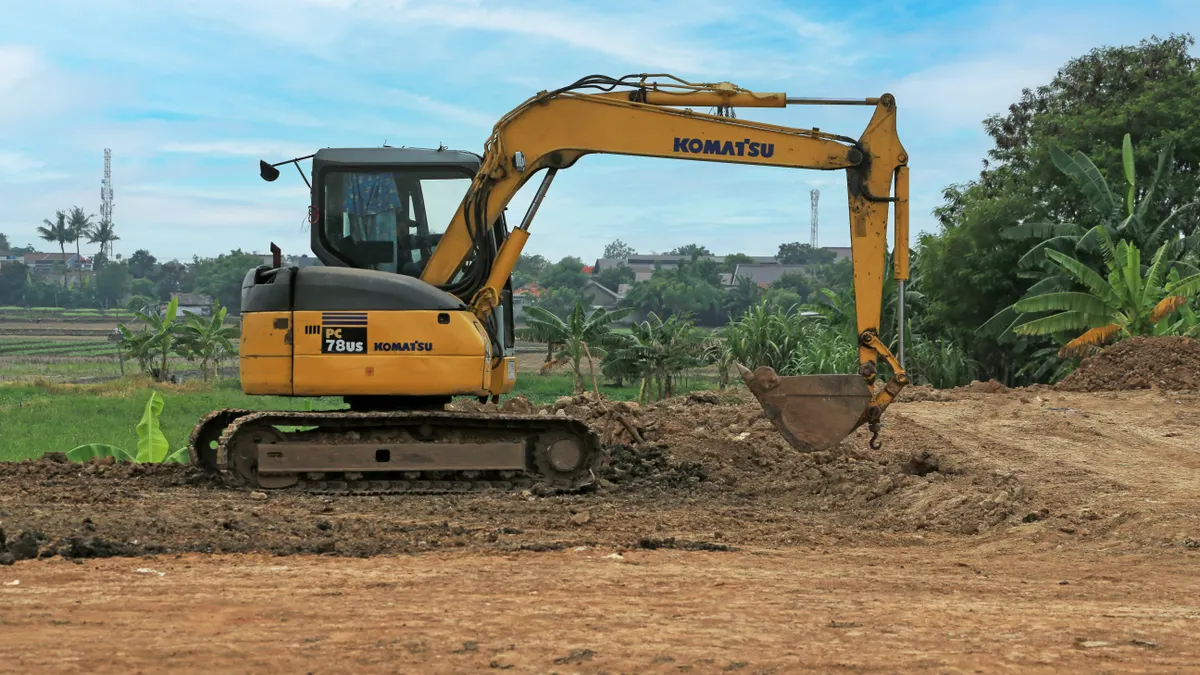
A trench is a narrow excavation in which the depth is greater than the width, and the width at the bottom is typically no more than 15 feet. That definition matters because once a cut is a trench, the rules for entry, protection, and inspection tighten fast.
The method matters because trenching failures are rarely about digging alone. They are usually about the gap between how the soil behaves and how the crew expected it to behave. Dry clay can stand for a while; the same wall can fail after rain, vibration, or a nearby spoil pile. Loose granular soil and wet sand are far less forgiving. OSHA requires a competent person to classify the soil and inspect the trench before and during the shift, which is not paperwork theater — it is the control that keeps the chosen method honest.
The practical choice is usually among four methods: open-cut excavation with sloping, excavation with trench boxes or shoring, mechanical trenching with a chain or wheel trencher, and vacuum excavation for exposure work. Each one has a clear lane. Open-cut is simple and fast on roomier sites. Trench boxes and hydraulic shores are for deeper or tighter cuts. Trenchers are for long linear runs with predictable conditions. Vacuum excavation is for precision near buried assets, especially where a hydroexcavation nozzle can uncover a gas line, fiber, or service without metal teeth in the ground. For more on safe locating and exposure, see OSHA’s excavation guidance and Common Ground Alliance best practices.
The wrong choice shows up quickly. A trenching attachment can be efficient on a new sewer run, but it is a poor fit in a street full of unknown utilities. A backhoe can open a trench anywhere, but it can also create a wider disturbance zone and a more irregular bottom. No single method is “best.” The site decides.
Which trench excavation method fits which job?
The safest answer is the one that matches the task, not the tool. For long straight utility runs in consistent ground, a trencher usually wins on production. For mixed conditions, tighter access, or variable depths, an excavator or backhoe is the better default. For utility exposure and sensitive work, vacuum excavation is the cleanest choice even though it will not replace bulk digging. On many sites, the right choice is confirmed by a competent person before the first cut.
A chain trencher cuts with a toothed chain running over a boom. It works well for narrow utility trenches because it can produce a relatively consistent width and depth with less spoil than a bucket machine. It is strongest in uniform soils and weakest in rock, root-heavy ground, and mixed debris. The downside is obvious: once the ground gets unpredictable, the chain becomes the wrong cutting tool and wear rises fast.
A wheel trencher uses a rotating wheel with cutting teeth. It is often the more aggressive option for harder soils and certain utility work, and it can be efficient on longer runs where the ground is known. Its limitation is flexibility. Tight turns, obstructions, and frequent depth changes cut into its advantage. It is not the machine for a congested downtown street with mystery utilities.
An excavator is the most versatile digging machine on a trench job. With the right bucket, it can open, widen, bench, backfill, and clean up. That flexibility is the reason it shows up on most civil and utility sites. The trade-off is that it is less specialized, so it can be slower than a trencher on a long simple line and more likely to create an uneven trench bottom if the operator is careless.
A backhoe is still valuable where the trench is short, access is limited, or the crew needs one machine that can dig and load from the same setup. It is not the answer for high-volume linear trenching, but it remains a practical machine for service installs and repair work.
Vacuum excavation is the specialty tool. It uses air or water to loosen soil and a vacuum to remove it. It is often the preferred method for potholing, daylighting, and working around mapped utilities because it reduces the chance of striking buried assets with steel. The cost is speed. It is much slower than mechanical excavation, and it is not the efficient choice for moving many cubic yards of soil. OSHA and CGA both emphasize utility verification before digging, which is why this method is used so often for exposure work.
The common mistake is choosing on machine size alone. A 36-inch bucket does not make a better trench if the bottom must be clean and the corridor is full of gas, water, and telecom lines. A smaller, controlled method often beats a bigger one.
The real difference between mechanical digging and vacuum excavation
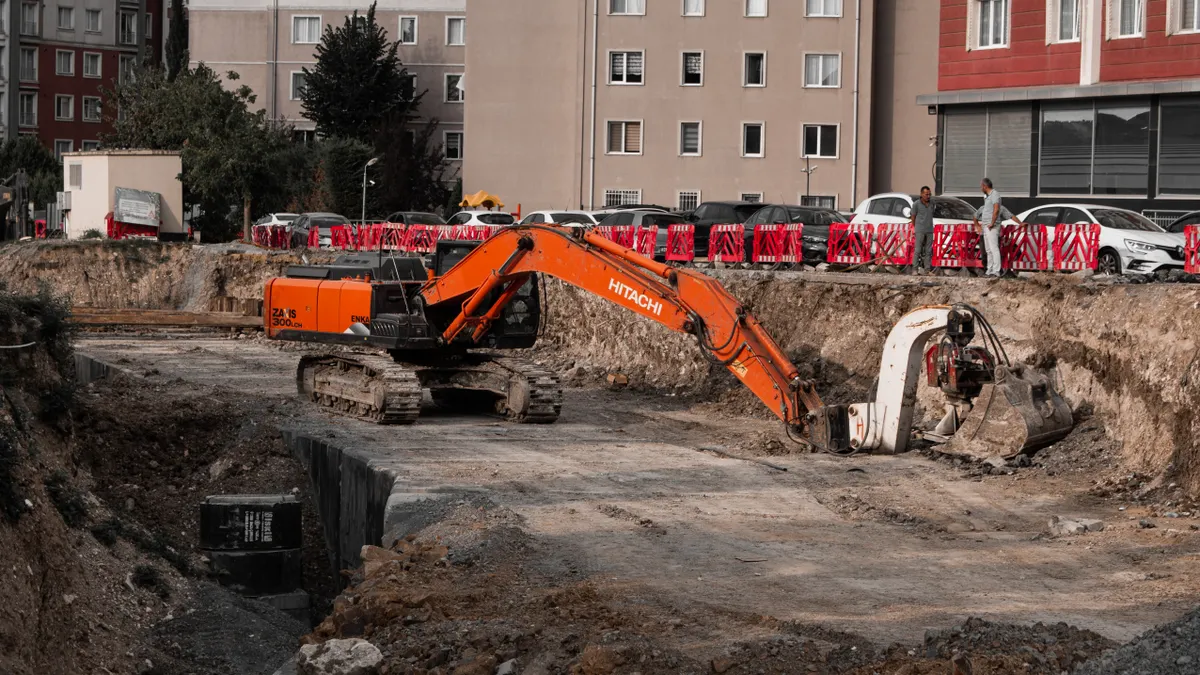
Mechanical digging wins on volume; vacuum excavation wins on control. That is the whole decision in one line.
Mechanical excavation — with an excavator, backhoe, trencher, or wheel trencher — moves soil efficiently. It is the right choice when the trench length, soil conditions, and access justify speed. A good operator can cut grade, manage spoil, and keep the crew productive. The downside is contact risk. A bucket tooth or trencher chain can damage utilities, undermine adjacent pavement, or create a trench face that needs immediate protection.
Vacuum excavation is slower but often safer around buried infrastructure. It is the method used when the question is not “how much soil can I move?” but “how do I expose this line without hitting it?” That makes it the clear winner for utility locates, tie-ins, crossing points, and daylighting before a larger cut. In practice, it often acts as a support method rather than the main production method. OSHA’s trenching guidance and CGA’s locate practices both support that workflow.
Here is the cleanest comparison for choosing between them:
| Criteria | Mechanical excavation | Vacuum excavation | Winner for condition |
|---|---|---|---|
| Production speed | High on long runs | Low to moderate | Mechanical excavation for bulk trenching |
| Utility strike risk | Higher | Lower | Vacuum excavation near marked utilities |
| Soil removal volume | Strong | Limited | Mechanical excavation for deep or long trenches |
| Precision around assets | Moderate | Very high | Vacuum excavation for daylighting |
| Equipment footprint | Usually larger | Can be compact, but needs hose and truck access | Vacuum excavation in congested utility corridors |
| Operator dependency | High | High, but with less direct cutting contact | Vacuum excavation where one mistake is expensive |
| Cleanup and backfill efficiency | Usually better for bulk work | More controlled, but slower | Mechanical excavation after utilities are exposed |
| Best use case | Main trench line | Locating and exposing utilities | Depends on task |
Mechanical excavation is wrong for one specific job: exposing unknown utilities in dense corridors. Vacuum excavation is wrong for another: opening a long utility trench where speed and volume matter more than precision. That is why many professional crews use both on the same project.
What equipment is used for trench excavation?
The main trench excavation equipment is an excavator, backhoe, trencher, or vacuum excavation unit, with the protection system chosen around it. That equipment list matters more than a brand name because the machine and the safety system have to work together.
An excavator, often on tracks, is the most common trenching machine on civil sites. Its long reach helps it place spoil away from the edge and dig to varying depths. The bucket can be swapped for different widths, but narrow buckets do not remove the need for trench protection. The advantage is versatility. The weakness is that the cut can become too wide or irregular if the operator is rushing.
A backhoe loader is the better choice for smaller projects, utility repairs, and municipal work where the machine must travel between tasks. It is less efficient than a dedicated excavator for sustained trenching, but it still earns its keep where mobility matters. The limitation is stability and reach compared with a track machine.
A chain trencher is the specialist for narrow, linear cuts. It is common on telecom, irrigation, and shallow utility lines. A wheel trencher occupies the same family but is better suited to harder ground and certain roadwork conditions. Both are productive only when the line is relatively straight and the ground is predictable.
Trench boxes, hydraulic shoring, and shield systems are not digging tools, but they are trench equipment in the real-world sense because they determine whether a trench can be entered. A trench box does not stop soil movement; it shields workers if a wall fails. Hydraulic shores actively support the walls. Sloping and benching reduce the risk by changing the geometry of the cut. OSHA’s excavation standard draws the line here: if the trench conditions call for protection, the crew needs it before entry, not after the first collapse scare.
A spoil pile, ladder, gas monitor, and competent-person inspection are part of the equipment package too. A trench can be dug with the right machine and still be unsafe if the spoil is too close, access is poor, or gas testing is skipped in a potentially hazardous atmosphere.
The better equipment setup is the one that keeps the trench productive without turning the edge into a failure point.
How do I choose the right trenching method for soil, depth, and site conditions?
Choose the method by starting with the soil classification, then the trench depth, then the site access. That order matters because a deep trench in weak soil can override every other convenience.
If the site has firm cohesive soil and enough room to slope the sides, open-cut excavation can be the simplest answer. It is fast, easy to inspect, and often cheaper in setup. The downside is footprint. Sloping needs space, and that space disappears on urban roads, between existing structures, or beside live traffic.
If the trench is deeper, narrower, or close to structures, trench boxes or hydraulic shoring become the better answer. This is the common choice when the trench must stay vertical or nearly vertical and the crew needs an entry path. The drawback is logistics. Protection systems take time to set, move, and reset. They also limit how much can be done from inside the trench.
If the line is long, straight, and relatively uniform, a trencher is usually the production choice. It is efficient for utilities laid in a clean corridor. It is a bad choice for mixed fill, rubble, or heavily congested ground. A trenching chain that hits debris repeatedly is not a productivity tool anymore; it is a repair bill.
If the first priority is avoiding damage to buried utilities, vacuum excavation should come first, even if the main trench will later be opened mechanically. That approach is common on projects where records are incomplete or where the tolerance for error is low. It is the right call near gas mains, fiber routes, and congested utility crossings.
The method changes again when groundwater appears. Dewatering, trench stability, and sidewall sloughing become part of the decision. Saturated soil can change the job in minutes, and the machine that looked ideal in dry conditions can become a poor fit once the trench starts pumping mud.
The plain rule is this: if the site is simple, a mechanical excavator or trencher often wins. If the site is congested, uncertain, or deep, the method shifts toward precision and protection.
When does trench protection matter more than the digging method?
Trench protection matters more than the digging method the moment a worker enters a trench that is not inherently stable. The machine can be perfect and the trench can still be deadly.
OSHA’s excavation rules require protective systems in trenches 5 feet deep or more unless the excavation is entirely in stable rock. That threshold is the point where many crews stop thinking about the cut as a temporary hole and start treating it as a confined work area with real collapse exposure. A 4-foot trench can still fail, especially in disturbed soil, but the regulatory trigger is the level where protection is assumed unless a competent person says otherwise.
Sloping is the simplest protective option when space allows. It reduces the chance of collapse by cutting the walls back to a safer angle. It is cheap in equipment terms, but expensive in footprint. That makes it a bad fit for downtown utilities and a good fit for open sites.
Benching steps the wall back in levels. It is useful in some soils, but it still needs room and good soil conditions. It is not a universal fix, and it can be badly misused if workers treat “steps” as a substitute for a proper soil assessment.
Trench boxes shield the worker if a wall fails. They are not a substitute for good ground, but they are a practical answer where the trench must stay narrow and vertical enough for the pipe work to continue. The catch is that the box must be used correctly and kept aligned with the work zone.
Hydraulic shoring actively braces the trench walls and is useful where trench width, nearby structures, or surface conditions make other methods awkward. It is more complex than a box and usually more expensive to set up, but it can solve problems that a sloped trench cannot.
The key point is that protection is not a separate phase after digging. It is part of the excavation method itself. A trench that cannot be protected safely should not be dug in that form.
Exception scenarios where the usual answer flips
The usual answer flips when the trench is short, the access is poor, or the utility risk is unusually high. Those are the cases where a tool that looks slower on paper is the better field choice.
First, if the trench is only a short tie-in or repair cut, a backhoe or even vacuum excavation can beat a trencher. The setup time for a chain trencher or wheel trencher can exceed the work itself. In that case, the faster answer is the machine that can position, expose, and backfill without a long mobilization.
Second, if the job is near a dense utility corridor with incomplete records, vacuum excavation should come before any mechanical cut. A mechanical bucket is efficient, but one bad strike can stop the job, damage infrastructure, and create a much larger repair scope than the excavation saved.
Third, if the site is narrow and deep with no room for sloping, a trench box or hydraulic shoring becomes the deciding factor. In that setting, even a machine that digs beautifully is not the main issue; the ability to keep the trench open safely is.
Fourth, if the soil is rocky or full of buried debris, the expected “fast” method may be the wrong one. A trencher can stall or wear out quickly. An excavator with the right bucket, or a staged approach that starts with vacuum exposure and then mechanical removal, can be the smarter choice.
These exceptions are not edge cases for the sake of drama. They are the jobs that force a real decision instead of a generic one.
The verdict: which trench excavation method should you choose?
Choose an excavator or backhoe if the trench is mixed-purpose, the ground is variable, and the crew needs one machine that can dig, clean, and backfill. Choose a trencher if the job is a long, straight utility run in predictable soil and speed matters more than flexibility. Neither if the plan ignores protection, utility locates, or competent-person inspection.
That is the practical call. The trench excavation methods and equipment decision is the one that matches the ground and the risk, not the one with the largest bucket or the loudest engine. If the trench is utility-heavy or the records are uncertain, vacuum excavation belongs in the plan. If the trench is deep or narrow, protection comes first and the dig method comes second. If the trench is open, simple, and long, a trencher can save time. If the trench changes every 20 feet, a versatile excavator is the safer bet.
The mistake to avoid is buying a method for the exception and then forcing it onto the whole job. A trencher is not a substitute for careful utility exposure. A vacuum truck is not a bulk excavation machine. A big excavator does not erase trench instability. The right combination is usually smaller and more specific than the instinctive one. For many crews, the most practical answer is a combined plan built around OSHA and CGA guidance.
What a generic trenching guide leaves out
A generic guide usually stops at “use the right machine” and skips the parts that decide whether the work is actually safe. It leaves out soil classification, spoil placement, groundwater, and the fact that trench protection changes the machine choice.
It also forgets that the trench is part of a larger system. Traffic control, utility locating, dewatering, spoil management, and access ladders all affect the excavation method. A trench cut with the perfect bucket is still wrong if the spoil is piled too close to the edge or the entry ladder is absent. Those failures are common because they are less visible than the machine.
The deeper point is that trench excavation is not a single task. It is a sequence: locate, verify, expose, dig, protect, inspect, and backfill. The best equipment lineup is the one that lets each step happen without forcing the others to compensate.
For formal guidance, OSHA’s excavation and trenching resources remain the primary U.S. reference, and ASSP’s safety materials are worth reading before any crew starts work. Both are more useful than a generic equipment list because they frame the real decision: how to dig without creating a collapse, strike, or access problem in the first place.
Drafted with AI; not yet reviewed by a person.