Trench safety, shoring, and compliance: the complete guide
Last updated: September 10, 2026
Key Takeaways
- A trench that stands at 4 feet on a dry morning can fail at 6 feet after rain, a passing truck, or a pipe leak.
- Below 5 feet, the collapse hazard still exists; the rule simply becomes less forgiving as depth increases.
- Place excavated material and tools at least 2 feet from the lip unless the design says otherwise.
- Use a ladder, ramp, or stair within 25 feet of lateral travel for trenches 4 feet deep or more, per OSHA practice.
Planning to work in a trench? Then the blunt answer is this: “Can I brace it later?” is the wrong question. What matters is whether the cut can stay standing long enough for people to enter, work, and get out without being buried, struck, or trapped. Trench safety, shoring, and compliance are about stopping a collapse before anyone climbs down; compliance means following the excavation rules that fit the soil, the depth, the utilities, and the protection system you pick.
Who this applies to — and who should do something else
Anyone opening a trench for utilities, drainage, foundation work, repairs, or inspections falls into this category once a person enters the cut. I’m talking about trenches, not broad excavations: a trench is usually deeper than it is wide, and that shape is why collapse gets ugly so fast. If you’re the competent person, a foreman, a superintendent, a utility crew leader, or a homeowner trying to figure out what a contractor ought to be doing, this guide is for you.
It assumes you already know the basics of site work: how to read a plan, where the utilities are supposed to be, and that soil can fail without warning. No soil-mechanics degree required. I’ll define the terms as I go, because trench safety, shoring, and compliance live or die on plain language. The main ones are straightforward: sloping means cutting the sides back at an angle; benching means cutting step-like ledges; shoring means holding the sides up with supports; and shielding means protecting workers inside a trench box or similar system if the wall moves.
This is high-stakes work. A collapse can bury a person in seconds. So some jobs are not for improvisation. Deep trench? Unstable soil? Water present? Road traffic nearby? Crowded utilities? No trained competent person to classify the soil and inspect the excavation? Stop and bring in qualified help before anyone enters. I’m not saying “call a professional” for every hole in the ground. I’m saying a trench is the wrong place to guess.
For a shallow garden bed or a short pipe run in clearly stable ground, with no one entering the cut, this level of control may be more than you need. The moment a body goes into the trench, though, everything shifts. OSHA’s excavation standard, 29 CFR 1926 Subpart P, is the baseline reference in the United States, and you should read the actual rule, not a summary. Same story for local code, utility-owner rules, and project specs.
What makes trenching dangerous in the first place?
Ground that fails doesn’t announce itself politely. One minute it looks solid; the next, it can let go in a block, a slide, or a fluid-like cave-in. Risk rises with depth, soil type, vibration, surcharge loads, water, and the shape of the cut. A trench that stands at 4 feet on a dry morning can fail at 6 feet after rain, a passing truck, or a pipe leak.
A surcharge load is anything adding pressure near the edge: spoil piles, construction equipment, traffic, stockpiled materials, even a building foundation close by. OSHA requires spoils and equipment to be kept at least 2 feet back from the edge unless a system is designed for a closer placement. That 2-foot rule sounds small. It isn’t. A couple of feet at the lip can change the wall stress enough to start a collapse.
And plenty of failures start with conditions the crew can see, then talk themselves out of. Water softens soil and can turn clay into slick, unstable material. Previously disturbed ground is less trustworthy than undisturbed soil. Frost, fill, and layered soils do not behave like the neat drawings in training slides. Adjacent structures, sidewalks, pavement, and utility vaults can also affect a trench. If the ground around the cut is cracked, sloughing, or fissured, the trench is already waving a red flag.
Honestly, I would treat any trench deeper than 5 feet as a job that needs formal protection unless a qualified person has documented the exception allowed by the standard. That’s not a casual line in the sand. Below 5 feet, the collapse hazard still exists; the rule simply becomes less forgiving as depth increases. A 4-foot trench can still kill someone. The real question is not “Is it under 5 feet?” It’s this: “Is the wall stable enough for a person to enter without cave-in protection?”
You also need a sharp eye for bad trench work. A lot of it looks tidy. The top edge is clean, the spoil pile is out of the way, the pipe is visible. But if the cut is vertical, the soil is cracked, and nobody has classified the soil or installed a protective system, the job may look orderly and still be out of compliance. Good trench safety, shoring, and compliance aren’t a visual style; they’re a controlled system. Messy, but controlled.
How do I choose sloping, benching, shoring, or a trench box?
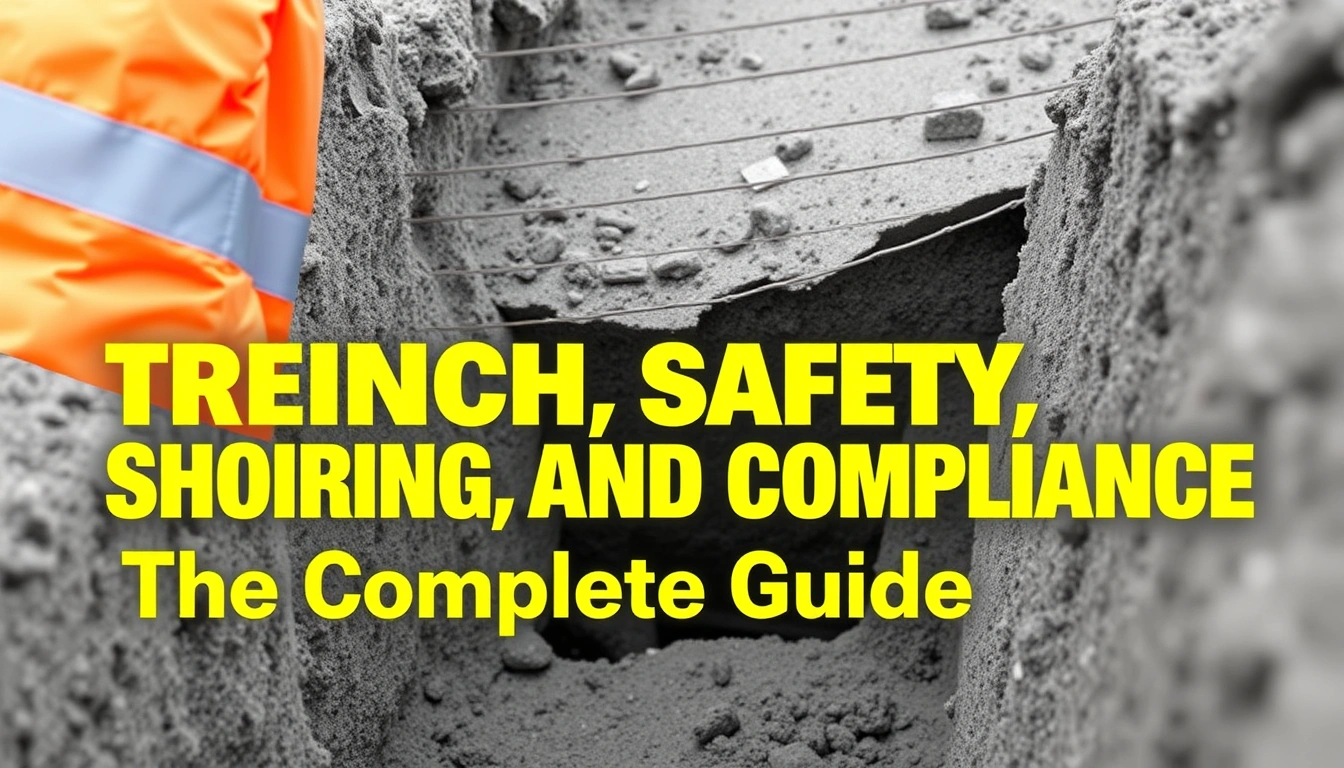
Pick the method that keeps the trench stable for the soil, the depth, and the work being done. There isn’t one “best” answer. Space, soil type, groundwater, nearby loads, and whether workers need long access or just a quick entry all change the call.
Sloping and benching use the geometry of the cut itself. In plain terms, you make the sides less steep so gravity has less to work with. Shoring uses supports against the walls. Shielding uses a protective structure, such as a trench box, to keep workers safe if the wall moves. And here’s the important part: a trench box does not prevent collapse. It protects the people inside if the collapse happens. That distinction matters. A box is not a substitute for a competent setup.
A common rule of thumb is that cohesive soils may allow steeper slopes than granular soils, but those decisions should rest on actual soil classification, not habit. A trained competent person can classify the soil as Type A, Type B, or Type C under OSHA’s system. That classification drives the allowable protective approach. Type A is the most stable, Type C the least. If the soil has water, is fissured, or has been previously disturbed, the classification can drop quickly.
Shoring comes in different forms: timber shoring, hydraulic shoring, pneumatic shoring, and manufactured systems. Hydraulic shoring is common because it can be installed and adjusted relatively fast, but it still has to be set correctly, loaded correctly, and inspected regularly. Manufactured trench shields are often easier to deploy, yet they still have to be sized for the trench and placed on the right floor bearing. A shield sitting on loose, undermined soil is not the same thing as a shield sitting on a level, competent base.
The work itself matters too. If workers need to install pipe joints or connect service laterals along the full length of the cut, a box may have to be moved in stages. If the line is shallow and the site has room, sloping may be simpler and safer. If the trench is squeezed between buildings or utility corridors, shoring may be the only workable option, depending on the site and the protection design. I wouldn’t force benching into a narrow site just because it’s familiar. In the wrong soil or a cramped corridor, benching can fail or simply swallow too much space.
What I would not do is let convenience choose for me. Cheapest is not always safest, and fastest is not always compliant. Decide on trench protection before the digging starts — not after the first person is already in the cut.
What should happen before anyone enters the trench?
The trench should be checked, classified, marked, and protected before entry, not after the crew is standing around the hole. This is where a lot of bad jobs go sideways: the hole gets opened, the schedule tightens, and the protection plan turns into a hope. That’s not a plan.
Here is the procedure I’d expect on a serious trench job:
- Locate and mark all utilities before the first cut. Use utility locating, permit records, and potholing or daylighting where required. Verify mark-outs against the plan and the actual site, and keep hand digging or vacuum excavation within the utility tolerance zone. A mismatch between records and field marks, or any unverified crossing, is a problem. Don’t trust one paint line.
- Classify the soil from the excavation face and spoil behavior. Have a competent person assess the soil as Type A, B, or C using the field indicators in the OSHA standard. Check whether the soil stands in a vertical cut, crumbles, weeps water, or shows fissures. Clay that sloughs, wet sand, fill material, or soil that changes consistency with depth is a problem.
- Set the protective method before entry. Choose sloping, benching, shoring, or shielding based on the soil and geometry. If using a trench box, size it for the trench width and work space, and set it at the correct depth. Verify that the system matches the trench conditions and manufacturer limits. Mixing methods without a design basis, or entering an unprotected trench “just to grab one tool,” is a problem.
- Keep spoils and equipment back from the edge. Place excavated material and tools at least 2 feet from the lip unless the design says otherwise. Verify that no wheel load, stockpile, or vibration source is too close. Spoil slumping back into the cut, cracked edges, or tracked equipment parked at the trench line are problems.
- Control water before it controls the trench. Pump standing water, divert runoff, and stop if seepage is changing the wall. Verify the bottom is not pumping, boiling, or softening under foot traffic. Water entering faster than it is removed, or erosion at the toe of the wall, is a problem.
- Provide safe access and egress. Use a ladder, ramp, or stair within 25 feet of lateral travel for trenches 4 feet deep or more, per OSHA practice. Verify the ladder extends 3 feet above the landing and is secured; for site-specific setup, consult a qualified professional and OSHA’s excavation guidance before workers enter. Workers climbing the wall, stepping on pipe, or walking too far to reach the exit are problems. OSHA: https://www.osha.gov/excavation
- Inspect before each shift and after any change. A competent person should inspect the trench before work starts, after rain, after vibration, after a cave-in sign, and after any change in configuration. Verify the walls, edge, protective system, and access points. New cracks, sloughing, bulging, heaving, or a damaged shield are problems. OSHA excavation inspections: https://www.osha.gov/excavation
- Control entry and keep the surface clear. Limit who enters, keep heavy tools organized, and maintain a clear path in and out. Verify no one is in the trench when lifting or repositioning the shield unless the system allows it and the crew is trained for it. Workers under suspended loads, clutter at the bottom, or an unplanned rescue scramble are problems.
That sequence sounds basic. It is basic. That’s where trench compliance lives. A competent person is not just a title on paper. Under OSHA, the competent person must be able to spot hazards and has authority to stop work. If that person is absent, uncertain, or overruled by the schedule, the trench plan is already broken.
I’d also treat documentation as part of the job, not bureaucracy, because OSHA’s excavation standard and the project record should match the field conditions; consult OSHA and the site safety professional before relying on a form alone. Soil classification, daily inspections, utility clearance, and protective-system decisions should be recorded. That record is not only for regulators. It helps the next shift know what changed overnight. OSHA excavation compliance: https://www.osha.gov/excavation
How do I know the trench is actually compliant?
A trench is compliant when the protection matches the hazard, access is controlled, and someone is actively monitoring changing conditions. A compliant trench isn’t just one that passes a quick glance. It’s one where the method, depth, soil, and site conditions line up with the standard and the field reality.
Start with OSHA 29 CFR 1926 Subpart P, especially the sections on protective systems, soil classification, inspections, and access/egress. If you want a check against the source instead of a secondhand summary, use OSHA’s excavation and trenching page and the eCFR text of Subpart P:
– OSHA: https://www.osha.gov/excavation
– eCFR, 29 CFR 1926 Subpart P: https://www.ecfr.gov/current/title-29/section-1926.650
At minimum, a compliant trench should have a competent person inspection before entry each day and after events that can change conditions. It should also have a protection system for trenches 5 feet deep or more unless the soil and conditions meet a very narrow exception. If the trench is 20 feet or deeper, the protective system generally needs to be designed by a registered professional engineer unless it is made from tabulated data, a hydraulic system, or another approved method used within its limits. That engineer threshold is one of the most misunderstood parts of the rule. People hear “20 feet” and think it’s just the same job with more depth. It isn’t. The loads and consequences climb enough that design matters.
Compliance also means the surrounding site is not ignored. Edge protection, traffic control, spoil placement, and equipment routing are all part of trench safety, shoring, and compliance. A trench can be protected and still fail a compliance review if dump trucks are too close or a backhoe is working over the top of an occupied cut. The trench and the surface above it are one system.
I’m going to be direct: if the crew cannot explain why the chosen protective method fits the soil and depth, the job is not compliant yet. “We always do it this way” is no defense in any meaningful safety review. Neither is “it looked fine yesterday.” Good compliance is boring because it is deliberate. Planning, spacing, inspection, restraint. That’s the whole game.
One more point that generic articles often miss: utility companies, municipalities, and owners may have stricter rules than OSHA. A public-right-of-way job can require traffic plans, lane-closure permits, and special shoring around adjacent pavement. An occupied building nearby can trigger additional structural precautions. OSHA is the floor, not the ceiling.
What are the mistakes that actually hurt people?
The mistakes that hurt people are usually simple, repeated, and avoidable. They happen when a crew treats trenching as ordinary dirt work instead of a temporary structure that can collapse. Here are the ones I see most often in practice as a matter of field risk analysis, not personal trial:
-
Putting people in a vertical trench without protection. The consequence is cave-in burial, which can become fatal in minutes. The correct alternative is sloping, shoring, or shielding before entry, with the method matched to soil and depth.
-
Ignoring water. The consequence is wall softening, sloughing, and sudden collapse, especially in sand, fill, or fissured clay. The correct alternative is to stop work, dewater or divert runoff, and re-inspect the trench before resuming.
-
Parking spoil and equipment at the lip. The consequence is added pressure on the wall and material falling back into the cut. The correct alternative is to keep spoils at least 2 feet back and route equipment away from the edge.
-
Using a trench box as if it were magic. The consequence is a false sense of security, especially if the box is too small, poorly placed, or set on unstable ground. The correct alternative is to treat the shield as one part of the plan and still control the surrounding trench conditions.
-
Skipping the competent-person inspection after rain or vibration. The consequence is entering a trench that changed overnight. The correct alternative is a documented inspection before re-entry after any weather event, surface load change, or wall movement.
-
Confusing a shallow trench with a safe trench. The consequence is underestimating risk and letting people climb in without access or protection. The correct alternative is to assess every cut, even if it is only 4 feet deep, because the standard does not make a trench safe just because it is shallow.
A bad trench job often looks efficient right up until something shifts. The signs are not subtle if you know what to watch for: hairline cracks at the edge, sloughing soil at the bottom, water seepage, a leaning trench box, or workers stepping on pipe because the access is poor. Any one of those is a warning. Several together mean stop.
When should I stop work and get a different plan?
Stop work the moment the trench no longer matches the protective plan, the soil changes, or the crew can’t keep people safe with the system already in place. This is the section people skip, and it’s the one that prevents the worst outcomes.
Cracks appear within 2 to 3 feet of the edge: the wall is losing stability — evacuate the trench and re-evaluate slope, shoring, or shielding before anyone goes back in.
Water is seeping, pooling, or pumping at the bottom: the soil is softening or washing out — stop entry, control water, and have the competent person reassess the trench.
A utility line, pipe, or unknown obstruction is exposed unexpectedly: the excavation may be undermining a support or hiding a crossing — stop digging until the line is identified and protected.
The trench gets deeper than planned, or the sidewall becomes steeper than the method allows: the existing protection may no longer fit the hazard — change the protective system or redesign the cut before entry.
The trench box no longer sits flat or the rails are damaged: the shield may fail under load —