How to Plan a Trench for Future Utility Upgrades
Last updated: October 21, 2026
Quick Answer
A future-ready utility trench is usually planned with one active route, one spare conduit, at least one reachable access point, and a clear drawing so later work does not require another full dig. The goal of How to Plan a Trench for Future Utility Upgrades is not to guess every future need; it is to make later additions easier, cheaper, and less disruptive by building in capacity now.
A future-ready utility trench is planned with extra space, spare conduit, access points, and a clear path for later work, so the next service upgrade does not require another full dig. The goal is not to guess every future need; it is to make later additions easier, cheaper, and less disruptive by building in capacity now.
What a future-ready utility trench is meant to solve

A future-ready utility trench is a trench designed so later utility additions can be pulled in without reopening the whole yard, driveway, or slab edge. That usually means spare conduit, spare sleeves, a handhole, pull string, and enough room in the service path to accept a future addition without tearing out finished work.
The big mistake is treating the trench as a one-time project; consult a professional if you are unsure how much spare capacity makes sense for your site. If the first installation only fits today’s service, the next upgrade often means saw-cutting pavement, repacking the trench, and redoing surface restoration. That is expensive in labor and frustrating in places where access is tight, like a narrow side yard or a driveway crossing.
This approach is not for a site where every utility is already fixed and no additions are likely. It is also not the right answer when a project already has a full, coordinated utility layout and no room for extra infrastructure. In those cases, oversizing the trench just adds cost and complicates compaction.
The practical aim is simple: leave a path for future service capacity. That can be as modest as one empty spare conduit with a pull string, or as deliberate as a deeper handhole at a logical access point. If the site will later need a second service panel location, a future addition should already have a route from the trench to that spot.
For a broader view of installation methods, the hub on utility line installation methods and use cases is the right companion page.
How do you plan a trench for future utility upgrades?
You plan a trench for future utility upgrades by deciding where later utilities may enter, how they will be pulled, and where access points belong before the trench is dug. Start with the likely future loads: another electrical circuit, fiber, irrigation control, low-voltage wiring, or a second service feed. Then give each likely future route an empty pathway instead of assuming it can be added later.
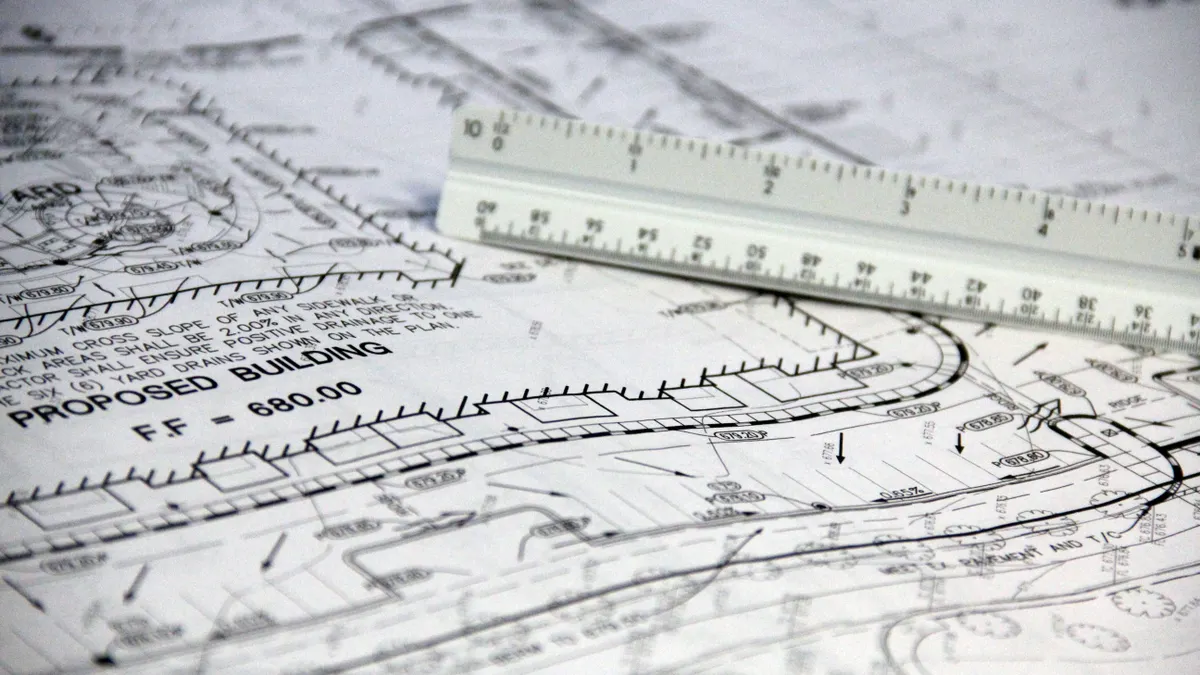
The most useful planning tool is a simple trench sketch. Mark the current utility route, the service panel location, the likely future addition points, and the access points where someone can open the run later. If the trench crosses a long distance, think in segments so the future installer is not trying to pull cable through an uninterrupted 70-foot run with no intermediate access.
A good planning rule is to create at least one spare pathway where the cost of digging later would be high. That often means a spare conduit in the trench, not just extra empty soil. Conduit protects the path from collapse, lets a later cable be pulled without reopening the trench, and makes the route easier to locate.
For sites with multiple phases, plan the second phase now even if it will not be installed yet. A future-ready utility trench is much easier to use when the end points, bends, and handholes are already in the right places. If the next addition might be near a garage, workshop, detached structure, or landscape zone, mark that on paper before anyone breaks ground.
Build in spare conduit and sleeves without overdoing it
Spare conduit and spare sleeves are the cheapest form of future capacity, but too many unused runs can waste money and crowd the trench. The point is to reserve pathways that a future installer can actually use, not to fill the trench with extras “just in case.”
A clean plan usually pairs one active run with one or more empty spares at the most likely upgrade points. For example, a service route might carry the present utility and leave a second conduit empty with a pull string for a future addition. If the site has a planned outbuilding or a possible service panel move, a sleeve through a slab edge or wall penetration can be more valuable than another buried length of conduit.
Keep the spares obvious and documented. Mark them at both ends, note where they terminate, and leave a pull string in each one so the next crew does not have to fish blindly. A short label at the handhole or panel end saves far more time than it costs.
The trade-off is that every spare piece adds material cost and can complicate coordination. Extra conduit also takes up physical space, and in a narrow trench that can matter. That is why “more” is not the goal. The goal is to place the right spare capacity at the points where re-digging would hurt most.
If the trench will support future service capacity, consider whether a slightly larger trench profile is worth it. A modest increase in width can make compaction and separation easier, but a trench that is oversized just to feel safe can create a bigger restoration job and more settlement risk if it is not compacted correctly.
Where should access points, handholes, and pull strings go?
Access points should go where a future installer can reach them without opening the whole route, and handholes belong at changes in direction or at long spans that would be hard to pull later. A pull string should be installed in every spare conduit and left long enough to find at both ends.
Handholes are useful because they turn one long buried run into manageable sections. They give the next crew a place to inspect, pull, and transition without re-digging the full trench. A handhole near a property edge, service entrance, or future branch point can be worth more than another 10 feet of buried pipe.
The placement has to make sense with the site, not just with the drawing. If a handhole ends up under a deck, behind a retaining wall, or inside a planting bed that will be permanently buried under mulch and roots, it stops being an access point and becomes a hidden problem. Put it where a person can open it in 5 minutes, not after an afternoon of demolition.
Pull strings are small but nonnegotiable in future-proofing. Without them, an empty conduit is only half useful. Leave a durable pull string in every spare conduit and label it at the ends. If the conduit route has more than one bend or a long straight run, a pull string is what keeps the future use realistic.
A common mistake is placing access points purely for the first installer’s convenience. That can save 10 minutes today and cost hours later. Future-ready planning asks a different question: where will the next crew need a place to work when the trench is already buried and the surface is finished?
How much room should you leave for future service capacity?
You should leave enough room for the likely next upgrade, not for every possible utility someone can imagine years from now. That usually means preserving conduit capacity, easy access, and a route to the service panel or other future termination point, rather than making the trench dramatically larger.
Oversizing has a real downside. A wider or deeper trench can mean more spoil to remove, more material to backfill, more compaction work, and a larger surface restoration area. In soft soils, a larger trench can also settle unevenly if the backfill is not handled well. If the extra space does not support a real future use, it can become expensive empty volume.
A better way to think about capacity is by scenario:
- one near-term future addition, such as another cable or control line;
- one future service panel path, if the property may need a new termination point;
- one access point for pulling or branching later;
- one spare sleeve or conduit where digging would be disruptive.
That is usually enough for a residential or light commercial plan. It is not enough for every industrial site, and that is intentional. Sites with heavy growth plans, phased construction, or multiple tenant changes need a more detailed utility plan than a generic trench can provide.
The smartest capacity choice is often not a bigger trench at all. It is a better route, a cleaner spare conduit, and access points in the right places. If the future addition can be served by a short sleeve through a wall, a handhole near the edge, and a labelled spare conduit, there is no need to keep expanding the trench itself.
Common mistakes that force re-digging later
The most expensive mistake is burying a trench with no documented spare route, because it turns a future upgrade into a new excavation. The next biggest mistake is placing spare conduit but not leaving a pull string, which makes the spare path annoying or unusable when the time comes.
Another error is stopping the trench plan at the first utility and ignoring the service panel location. If the future addition will need to terminate at a different point, the missing path from trench to panel becomes the real bottleneck. A future-ready utility trench should be planned from the ground up to the point of use, not only along the buried section.
A third mistake is assuming every empty pipe is a good idea. A few useful spares are practical; a bundle of random unused runs can create confusion at the handhole and waste budget. Clear labels and a simple map matter more than sheer quantity.
The last mistake is building access points where they will later be blocked by pavement, landscaping, or structures. A handhole that cannot be opened without removing a deck board or cutting concrete is not future-proofing. It is hiding the problem.
The fix is boring and effective: draw the future path first, reserve only the spares that serve a likely use, label everything, and keep access points reachable. That approach reduces re-digging without turning the trench into a costly, oversized trench box of empty conduits.
What should be on the trench drawing before digging starts?
The trench drawing should show the current route, every spare conduit, each handhole, the service panel location, and every planned future addition point. It should also note which path is active now and which runs are reserved for later, because a buried trench without a clear map is easy to forget and hard to trust.
A good drawing does not need to be fancy. It needs to be readable in the field. Mark distances, turning points, and termination points so a future crew can find the route without guessing. If the trench crosses a driveway, runs along a fence line, or approaches a detached structure, those landmarks should be on the sketch.
Keep the drawing with the project file and label the field marks the same way. A handhole labeled “spare” on the sketch should be labeled “spare” on site. Consistent naming keeps the future installer from opening the wrong box or assuming a conduit is already occupied.
This is also where coordination matters. If one phase is being installed now and another later, the drawing should make that split obvious. The best future-ready utility trench is not just physically prepared; it is documented well enough that the next person can use it without starting from scratch.
Key Takeaways
- Plan for the most likely next upgrade, not every imaginable one.
- Use spare conduit, spare sleeves, handholes, and pull strings to reduce future digging.
- Put access points where a person can reach them after the site is finished.
- Keep a clear path from the trench to the service panel or future addition point.
- A few well-placed spares beat a larger trench packed with unused capacity.
- A labeled drawing matters as much as the buried infrastructure.
Should you install extra conduit now?
Yes, if the trench will be hard to reopen later or a future addition is likely. Extra conduit is most useful when it serves a known future path, such as a second circuit, a detached structure, or a service panel change. It is less useful when added without a clear destination.
How do you leave room for future lines?
Leave room by reserving pathways, not by simply making the trench bigger. Use spare conduit, spare sleeves, pull strings, and accessible handholes so later lines can be added without full re-digging. Document which runs are open, which are reserved, and where each future addition is expected to terminate.
What is the best way to future-proof a trench?
A strong approach is to combine a spare conduit, a reachable handhole, and a clear drawing that shows where the future utility will go. That mix reduces re-digging, keeps the trench usable, and avoids the cost of oversized excavation that may never be needed.
Drafted with AI; not yet reviewed by a person.